

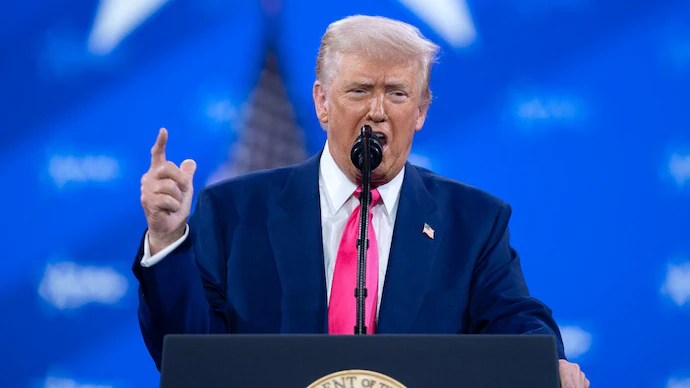
US President Donald Trump warned Iran it would “pay a big price” after rejecting a US ceasefire proposal, setting a firm Tuesday deadline for a deal. While Iran pushed for a permanent end to the conflict with broader conditions, Trump signalled severe consequences if no agreement is reached.
US President Donald Trump on Monday said he was “very upset” with Iran and warned that Tehran is “going to pay a big price” if it fails to reach a deal, signalling a hardening stance as his self-imposed deadline approaches.
Speaking to reporters outside the White House, Trump made it clear that the Tuesday deadline for Iran to agree to terms is final.
Tensions between the United States and Iran have escalated sharply after Iran rejected a ceasefire proposal backed by U.S. President Donald Trump. The rejection has triggered strong rhetoric from Washington, with Trump warning that Iran and its allies would “pay a big price” if demands are not met. The development comes amid an ongoing and increasingly dangerous conflict involving the U.S., Iran, and regional actors, raising fears of a broader war in the Middle East.
This article explores the background of the crisis, Iran’s reasons for rejecting the ceasefire, Trump’s response, global implications, and what lies ahead.
Background of the Conflict
The current conflict traces back to escalating tensions between the U.S. and Iran, which intensified into open military confrontation in early 2026. The war has involved:
- U.S. and Israeli strikes on Iranian infrastructure
- Iranian retaliation across the region
- Closure of the strategically vital Strait of Hormuz
The Strait of Hormuz is a critical global oil route, carrying nearly one-fifth of the world’s oil supply. Its closure has already disrupted global markets and increased oil prices significantly. (Reuters)
Thousands of casualties have been reported across Iran and neighboring regions, highlighting the severe humanitarian cost of the conflict. (Reuters)
The Ceasefire Proposal
The United States, along with international mediators such as Pakistan and other regional powers, proposed a ceasefire aimed at:
- Halting military operations
- Reopening the Strait of Hormuz
- Initiating diplomatic negotiations
The U.S. reportedly put forward a detailed multi-point plan, which included conditions related to Iran’s nuclear program, missile capabilities, and regional activities. (The Washington Post)
However, Iran viewed the proposal as heavily one-sided and unacceptable.
Why Iran Rejected the Ceasefire
Iran officially rejected the ceasefire, stating that it sought a permanent solution rather than a temporary truce. (Reuters)
Key reasons for rejection:
- Demand for Sanctions Relief
Iran insisted that any agreement must include lifting economic sanctions. - Long-Term Security Guarantees
Tehran wants assurances against future attacks. - Regional Stability
Iran called for an end to broader regional conflicts, not just a temporary halt. - Control Over Strait of Hormuz
Iran used the closure as leverage in negotiations. - Reconstruction and Compensation
Iran demanded support for rebuilding war-damaged infrastructure.
Iran also described the U.S. proposal as “maximalist and unreasonable,” indicating a deep gap between both sides. (Al Jazeera)
Trump’s Reaction: “They Will Pay a Big Price”
Following Iran’s rejection, President Donald Trump issued a strong warning, expressing frustration and anger.
Key highlights of Trump’s response:
- Declared Iran’s proposal “not enough”
- Warned of severe consequences if demands are ignored
- Set deadlines for reopening the Strait of Hormuz
- Threatened further military escalation, including targeting infrastructure
Trump emphasized that failure to comply could lead to intensified U.S. military action, including potential strikes on Iran’s energy and power systems. (New York Post)
His rhetoric reflects a shift toward a more aggressive stance, increasing fears of a prolonged conflict.
Military Escalation Continues
Despite diplomatic efforts, both sides have continued military operations:
- Israeli forces intensified attacks on Iranian targets
- Iran launched retaliatory strikes across the region
- Civilian and military casualties continue to rise
The situation remains volatile, with no immediate signs of de-escalation. (Reuters)
Global Impact of the Crisis
1. Oil Prices Surge
The closure of the Strait of Hormuz has caused oil prices to spike dramatically, impacting global economies.
2. Economic Uncertainty
Markets worldwide are experiencing volatility due to fears of prolonged conflict.
3. Regional Instability
Neighboring countries face security risks, raising concerns of a wider Middle East war.
4. Diplomatic Pressure
Countries like Pakistan, Turkey, and Egypt are attempting to mediate a resolution.
International Mediation Efforts
Several nations have stepped in to prevent further escalation:
- Pakistan has played a key role in facilitating dialogue
- Middle Eastern and European countries are pushing for negotiations
- A temporary 45-day ceasefire proposal has been discussed
However, deep mistrust between the U.S. and Iran continues to hinder progress.
Trump’s Strategy and Criticism
Trump has defended his approach, claiming that:
- The U.S. has already achieved major military objectives
- Pressure tactics are necessary to force Iran into compliance
However, critics argue that:
- His strategy lacks a clear long-term plan
- Aggressive rhetoric may worsen the situation
- The risk of a full-scale war is increasing
What Happens Next?
Possible Scenarios:
- Escalation into Full War
Continued military strikes could lead to a broader regional conflict. - Temporary Ceasefire Agreement
Mediators may succeed in securing a short-term truce. - Diplomatic Breakthrough
A revised agreement addressing Iran’s concerns could emerge. - Prolonged Stalemate
The conflict may continue without resolution, worsening global instability.
Conclusion
The rejection of the ceasefire proposal by Iran marks a critical turning point in the ongoing conflict. President Donald Trump’s warning that Iran will “pay a big price” underscores the seriousness of the situation and the potential for further escalation.
With rising casualties, economic disruption, and increasing global concern, the need for a diplomatic solution has never been more urgent. However, deep divisions between the two sides make peace difficult to achieve in the near term.
FAQs
Q1. Why did Iran reject the ceasefire proposal?
Iran rejected the proposal because it wanted a permanent solution, including sanctions relief, security guarantees, and regional stability, rather than a temporary ceasefire.
Q2. What did Donald Trump say after the rejection?
Donald Trump warned that Iran would “pay a big price” and threatened further military action if U.S. demands are not met.
Q3. What is the Strait of Hormuz and why is it important?
It is a key global oil shipping route. Its closure affects global energy supply and increases oil prices.
Q4. Is the conflict still ongoing?
Yes, military operations continue on both sides, with no immediate ceasefire in place.
Q5. Are there any peace talks happening?
Yes, several countries are mediating, but no agreement has been reached yet.
Q6. What are the global consequences of this conflict?
The conflict has led to rising oil prices, economic instability, and fears of a wider regional war.